Here is the full post combined into one polished version:
Recently, we read “Existentialism Is a Humanism” by Jean-Paul Sartre in both of my sections of Ethics and Good Living at USM. I have always appreciated the text because it does a really nice job of explaining what I think are the two main views of meaning at a bird’s-eye view.
What does meaning look like if there is no meaning-giving God, human nature (who would give it if there is no God?), or moral blueprint (what is morality but something an individual makes up or a culture creates, which means it is only temporary and transitory)?
On the other hand, what is meaning if there is a personal, moral God who engages with creation and gives meaning? This God would, in the words of Christian theologian Stanley Grenz, have “preferences.” This is to say that God would approve of X and disapprove of non-X as it aligns (or does not align) with his own nature.
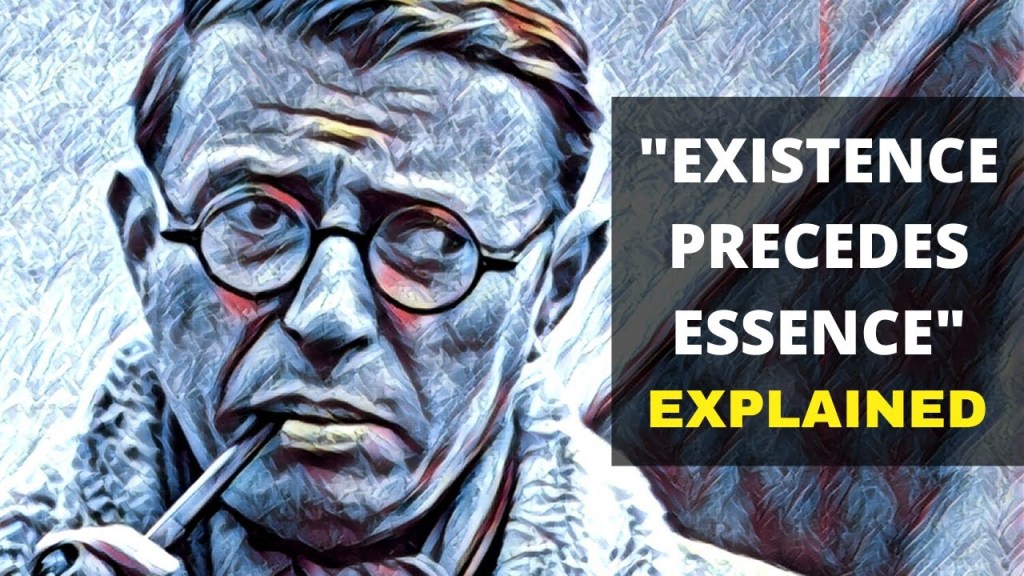
In the former case, Sartre, who is an atheist, argues that we are “condemned” (his word) to creating our own meanings (lowercase “m”). When meaning does not exist, we must create it. His phrase to capture this is “existence precedes essence,” which is helpful if we think of “essence” as meaning or purpose. In other words, we first exist, and only afterward begin shaping who we are by the choices we make. For Sartre, there is no fixed human nature or God-given purpose waiting to be discovered; instead, each person must take responsibility for forming an identity and way of life through action.
Yet a personal, moral, meaning-giving God changes all of this. Sartre rightly uses the opposite phrase, essence precedes existence, to capture the worldview of Christians. He uses the analogy of a paper knife to give further clarity. A paper knife is made with a purpose already in mind before it ever exists. In the same way, if God exists and creates human beings, then our purpose is not something we invent but something given prior to our existence.
Why do I like this article so much? I like anything that is honest and does a nice job of helping us think through distinctions. Sartre helps us get clear on what exactly is lost if there is no God. Of course, he wants to present this as an invitation of sorts, which rings in the ears of so many young people who are obsessed with creating an identity that they feel good about. But is identity created? If meaning is, then yes.
But Christians do not believe that meaning, or at least ultimate meaning, is created. Instead, it is given by God—an essence that precedes our birth. Thus, it is discovered. You discover something that is already there; you create only when something isn’t. We are created to know God’s love, to love him, and to glorify him in all that we do. That is the intended essence of every human being. At the same time, this does not mean that every move or task is dictated in advance. Rather, it leaves open vast opportunities to partner with God in co-creating, as he invites us to wonder, think, and create with worship in our hearts.
Not only does Sartre help us think clearly about meaning in human life from two perspectives, but he offers terms and concepts that are helpful as well, including ones that can be picked up and assimilated into Christian thought and practice. For example, one of his famous terms is “bad faith.” This means pretending that God, human nature, or morality exists when, in his view, these things prevent you from having the freedom you actually have. In other words, you convince yourself that certain things exist that do not exist in order to make yourself feel better about the life you have lived or are living. This is especially helpful if you have made big mistakes, feel guilty and ashamed, and cannot go back and fix things you wish you could fix. But if it was determined for you, if you really were not free, then you do not have to feel bad. Sartre says that this is denying your freedom, and it means you are living in bad faith.
But this concept can be assimilated into Christian thought and practice to some degree. Socrates said that the unexamined life is not worth living, and David writes something similar, except that he does so within a theocentric worldview: “Search me, God, and know my heart; test me and know my anxious thoughts. See if there is any offensive way in me, and lead me in the way everlasting” (Ps. 139:23–24 NIV). We are to live thoughtful, examining lives, yet we are to avoid morbid introspection by allowing the Holy Spirit to guide us in the process. God convicts from a place of love, and so even when we are being convicted of sin, it is evidence that God is our Father (Proverbs 3 and Hebrews 12 explain this).
So what does living in bad faith look like in the Christian faith? Paul tells us to work out our own salvation, although it is God who works in us. God? Us? Both! While the lines of demarcation cannot be fully drawn—it is a mystery—God affirms through the inerrant Word in Paul’s writing that he has tasked us with working out what salvation means in everyday life. We have a part to play, and it is an important part. Living in bad faith would mean denying this part, or role (e.g., It is all up to God. It is all on God. What will be, will be.). For Christians, living in bad faith means denying our role—the part God wants us to play.
While we can easily swing to the other false extreme—it is all up to us—we must not live in bad faith, which, in Sartrean terms, would mean Christians denying the freedom we do have in working out our salvation and growing up in our salvation (1 Peter 2:2).
Ultimately, I find great joy in reading people I do not agree with and seeing what they have to offer in terms of the following:
- understanding my faith
- understanding the way that others think
- being better prepared to explain the Christian faith
It is Christian philosopher Alvin Plantinga who says that doing philosophy is thinking hard about something. So let’s be Christians who think hard about things, and in doing so, prepare to better serve those who are searching for answers, asking about truth, and looking for existential treasures.
 Dr. BJ Condrey
Leave a comment